
Newsletter

Property Improvement Plans for Sectional Title Schemes: From Reactive Repairs to Long-Term Value
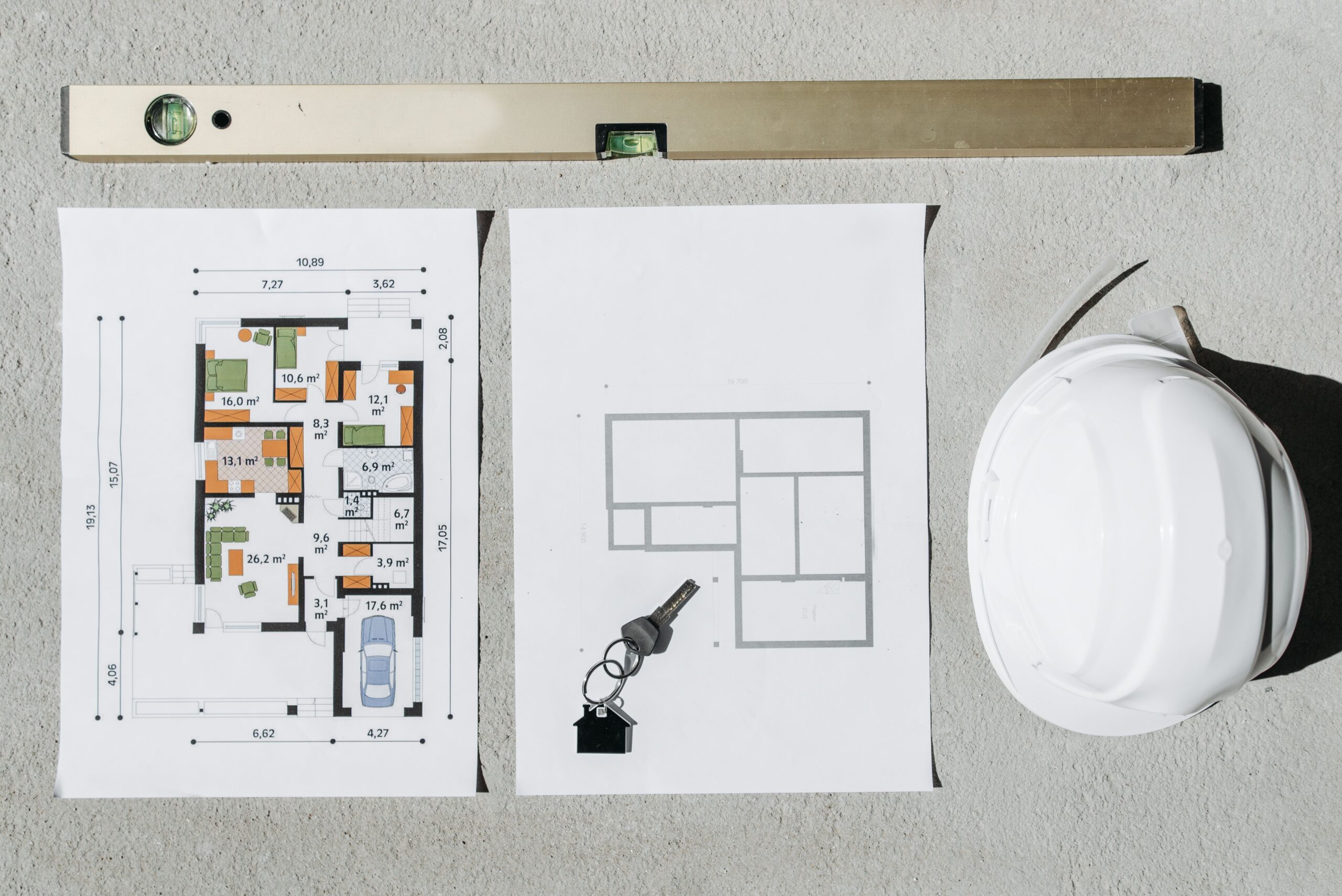
property improvement plan

A well-maintained sectional title scheme does more than look attractive. It protects property values, supports resident satisfaction and helps the body corporate avoid the financial shock of major, unplanned repairs. This is where a practical property improvement plan (also known as a 10 year maintenance plan) becomes essential.

For trustees, however, developing and implementing such a plan can be complex. It requires an understanding of the condition of the common property, the scheme’s legal obligations, available finances, owner priorities and the contractors needed to complete the work. An experienced sectional title managing agent such as Solver Property Services helps bring these elements together.

What is a property improvement plan / 10 year
maintenance plan?

A property improvement plan is a structured roadmap for maintaining, repairing and improving a property over time. In a sectional title scheme, it may cover shared assets such as roofs, exterior walls, security systems, lifts, paving, boundary walls, gardens, swimming pools, plumbing infrastructure and communal facilities.

The plan should identify what needs attention, distinguish urgent repairs from future upgrades, estimate costs and allocate realistic timeframes. It gives trustees a clearer basis for decision-making and helps owners understand how planned expenditure contributes to the long-term health of the scheme.

Importantly, a general property improvement plan should work alongside the scheme’s legally required maintenance, repair and replacement planning. Under South Africa’s Sectional Titles Schemes Management Act and Regulations, a body corporate must prepare a written maintenance, repair and replacement plan for major capital items over a ten-year period.

Property improvements that go beyond maintenance may also require specific approvals, depending on their nature. Proper guidance is therefore important before work is authorised.

Why sectional title schemes need a proactive plan

Without a clear plan, maintenance often becomes reactive: a roof is repaired only after water damage appears, exterior painting is delayed until deterioration is advanced, or an ageing security system is replaced only after it fails. Emergency work is usually more disruptive and can cost more than planned preventative maintenance.

A well-managed property improvement plan helps a body corporate:

● Prioritise essential maintenance and upgrades
● Budget more accurately for future expenditure
● Build an appropriate reserve fund
● Reduce the likelihood of unexpected special levies
● Obtain and compare quotations in good time
● Communicate planned work clearly to owners
● Improve safety, functionality and visual appeal
● Protect the marketability and value of units

It also allows trustees to make decisions based on evidence rather than responding to whichever maintenance issue is most visible or urgent at the time.

What should the plan include?

An effective plan should begin with a review of the scheme’s common property and major assets. Existing defects, expected useful life, previous maintenance, safety concerns and compliance requirements should all be considered.

Each proposed project can then be recorded with:

● A description of the work required
● Its urgency and priority
● An estimated implementation date
● An indicative cost
● The preferred funding source
● Any required owner or trustee approvals
● Responsibility for obtaining quotations and overseeing delivery

The plan should not be treated as a once-off document. Costs change, assets deteriorate, new risks emerge and owner priorities evolve. Regular review helps keep the plan realistic and aligned with the scheme’s budget and reserve position.

Solver’s role in turning the plan into action

Trustees remain responsible for governing the body corporate, but they do not have to manage every operational detail alone. Solver Property Services provides hands-on support that helps sectional title schemes move from planning to implementation.

Solver can assist trustees with proactive maintenance planning such as obtaining 10 year maintenance plans, budgeting, financial reporting, contractor coordination and project administration. When maintenance or improvement work is required, the team can help assess the issue, obtain quotations or tenders, facilitate the relevant approval process, coordinate communication and track the work against agreed expectations.

This joined-up approach is particularly valuable because property maintenance cannot be separated from financial management. A project may be necessary, but it must also be affordable. Solver’s focus on accurate budgeting, reserve planning and transparent financial information helps trustees understand what the scheme can fund, what needs to be phased and whether levy planning needs attention.

Trustees also benefit from clearer records and reporting. Solver’s online systems provide access to relevant financial information, documents and job tracking, helping scheme
executives monitor progress and make informed decisions.

A plan that protects more than the buildings

A property improvement plan is ultimately about protecting the entire community. Well-planned maintenance can reduce conflict over unexpected costs, improve confidence in the body corporate and create a more pleasant environment for residents. It also shows prospective buyers that the scheme is being managed responsibly.

The strongest plans balance immediate needs with long-term priorities. They account forcompliance, affordability, preventative maintenance and value-enhancing improvements without placing unnecessary pressure on owners.

If your sectional title scheme is struggling with recurring maintenance problems, an inadequate reserve fund, unclear priorities or projects that never progress beyond discussion, professional management can make the difference.

Solver Property Services has managed community schemes since 2005 and combines property administration, financial expertise, maintenance oversight and compliance support in one hands-on service. Contact Solver to discuss your scheme’s needs and request a tailored property management proposal.

Disclaimer: This article is for general informational purposes only and should not be considered legal advice. Community Schemes should consult professional legal advisors to ensure compliance with applicable laws and regulations.

sectional title maintenance

One of the most common questions in sectional title is also one of the most difficult to answer with a simple “yes” or “no”:

Who is responsible for paying when something needs to be repaired or replaced?

A leaking geyser. A cracked window. A burst pipe. Damp on an internal wall. A damaged balcony. A leaking roof. A blocked drain.

The answer is not always obvious.

In a sectional title scheme, understanding who is responsible for the maintenance, repair and replacement of a particular item requires looking at whether the item forms part of the owner’s section or the common property (as well as whether any exclusive-use rights or scheme rules affect the position).

This is why disputes about maintenance can become complicated. The person who discovers the problem is not necessarily the person who is responsible for fixing it or paying for it.

The starting point: section or common property?

The first question should always be:

Is the item part of the section or part of the common property?

The Sectional Titles Act provides the framework for dividing a development into individually owned sections together with jointly owned common property. The Sectional Titles Schemes Management Act 8 of 2011 (STSMA) then governs the management and financial administration of the scheme.

Broadly speaking:

  • Owners are generally responsible for maintaining their sections.
  • The body corporate is responsible for maintaining the common property.

The distinction can become more complicated where an item sits on or forms part of a boundary between a section and common property (or where an area is subject to exclusive-use rights).

This is why simply saying “it’s outside my unit, so the body corporate must pay” is not always correct.

What is common property?

Common property generally includes the parts of the scheme that do not form part of an individual section.

Depending on the scheme, this may include areas such as:

  • roofs
  • external walls
  • foundations
  • staircases
  • passages
  • driveways
  • communal gardens
  • communal facilities
  • certain plumbing and electrical infrastructure
  • structural elements of the building

The exact position should always be checked against the registered sectional plan, applicable rules and the circumstances of the particular repair.

The STSMA places an obligation on the body corporate to maintain the common property and keep it in a state of good and serviceable repair.

What is the owner normally responsible for?

An owner is generally responsible for maintaining and repairing their own section.

For example, this may include items that form part of the interior of the section and are not common property.

However, there are important exceptions and grey areas.

A good example is a window or door.

It is tempting to assume that because a window is physically inside or immediately adjacent to a section, the owner must automatically pay for it. However, the legal position depends on how the boundaries of the section are defined and how the particular element is treated under the sectional plan and applicable law.

This is why a proper assessment is often required before a repair responsibility is allocated.

A practical guide to common maintenance questions

The table below provides a useful, very basic, starting point. It is not a substitute for reviewing the sectional plan, rules and circumstances of the specific scheme.

Item / problem

Typical starting point

Important consideration

Roof

Body corporate

Generally common property and part of the body’s maintenance obligations

External walls

Body corporate

Structural/common-property responsibility generally rests with the body corporate

Foundations

Body corporate

Normally common property

Communal driveway

Body corporate

Generally common property

Communal garden

Body corporate

Subject to the scheme’s rules and any exclusive-use arrangements

Internal finishes

Owner

Generally part of the owner’s section

Internal plumbing

Owner or body corporate

Depends on where the pipe is located and whether it serves the section or common property

Main/common water pipe

Body corporate

Usually common-property infrastructure

Geyser

Depends

The position should be established from the sectional plan, rules and applicable legislation

Window

Depends

The boundary and legal classification must be considered

Garage door

Depends

The sectional plan and relevant boundaries are important

Balcony

Depends

A balcony may involve both section and common-property considerations

Exclusive-use garden

Depends

Exclusive use does not necessarily turn common property into privately owned property

Exclusive-use parking

Depends

Responsibility for costs can be affected by the nature of the exclusive-use right and the applicable rules

Common-property leak

Body corporate

The body corporate generally has responsibility for common property

Damage caused by a common-property defect

Depends

Responsibility for the underlying defect and resultant damage should be considered separately

That last point is particularly important.

The difference between the cause of the problem and the resulting damage

Consider this example:

A common-property pipe develops a leak and water enters an owner’s unit.

There are potentially two separate questions:

  1. Who is responsible for repairing the pipe?
  2. Who is responsible for repairing the damage caused by the water?

The answer to the first question does not automatically determine the answer to the second.

Insurance may also become relevant.

For this reason, owners and trustees should avoid immediately deciding who is liable based purely on where the water appeared.

Find the source first. Determine the responsibility second.

What about geysers?

Geysers are one of the most common sources of confusion in sectional title schemes.

An owner may reasonably assume that the geyser inside their unit is automatically their responsibility. A body corporate may have a different view depending on the scheme’s documentation and the location and classification of the installation.

The correct approach is not to rely on assumptions.

The scheme should consider:

  • the sectional plan
  • the position of the geyser
  • the pipework serving the geyser
  • the scheme’s rules
  • applicable legislation
  • the insurance policy
  • whether the issue relates to maintenance, replacement or resultant damage

A good managing agent should be able to help trustees identify the relevant documents and establish the appropriate process.

What about exclusive-use areas?

This is another area where owners frequently misunderstand the position.

An exclusive-use area is not necessarily privately owned property.

An owner may have the exclusive right to use a particular portion of common property (for example, a parking bay or garden), while the underlying property remains common property.

The STSMA specifically provides for additional contributions relating to certain exclusive-use areas to cover costs such as rates, insurance and maintenance (subject to the applicable rules).

This means that the question is not simply:

“Who uses the area?”

Instead, trustees should establish:

What is the legal status of the area and what does the legislation and scheme documentation say about responsibility for its maintenance and costs?

Who should appoint the contractor?

Another common problem occurs when an owner experiences an urgent maintenance issue and decides to appoint a contractor themselves.

That can create complications where the work relates to common property.

If an owner believes that the body corporate should be responsible for a repair, it is generally better to report the problem to the managing agent or trustees first, particularly where the work could involve significant expenditure.

This allows the body corporate to:

  • investigate the problem
  • establish responsibility
  • obtain appropriate quotations
  • consider insurance
  • approve the expenditure where required
  • appoint an appropriate contractor
  • keep proper records

There may obviously be situations involving genuine emergencies where immediate action is necessary to prevent further damage. Even then, the body corporate should be notified as soon as possible.

What happens when an owner fails to maintain their section?

The responsibility does not simply disappear because an owner does not attend to a problem.

The sectional title legislation and regulations provide mechanisms for dealing with failures to maintain sections and certain exclusive-use areas.

The regulations provide that where an owner fails to repair or maintain their section (or adequately maintain certain exclusive-use areas) and the failure continues after written notice, the body corporate may in appropriate circumstances remedy the failure and recover the reasonable cost from the owner.

This is an important protection for the wider community.

One owner’s failure to maintain their property can sometimes cause damage, inconvenience or expense for other owners.

What about insurance?

Maintenance responsibility and insurance responsibility are not necessarily the same thing.

A body corporate is required to insure the building in accordance with the STSMA and applicable regulations.

However, the existence of insurance does not mean every repair will automatically be covered.

When damage occurs, trustees should consider:

  • What caused the damage?
  • Is the affected property common property or part of a section?
  • Is the item insured?
  • What does the policy cover?
  • Is there an excess?
  • Was there a maintenance failure?
  • Is the repair preventative maintenance rather than insured damage?
  • Is there resultant damage that should be treated separately?

Insurance should therefore be considered alongside the maintenance responsibility rather than instead of it.

The maintenance plan matters

A financially healthy sectional title scheme should not be relying entirely on emergency decisions when major maintenance becomes necessary.

The STSMA requires a body corporate to establish and maintain a reserve fund that is reasonably sufficient for the future maintenance and repair of common property.

The regulations also provide for a maintenance, repair and replacement plan and reserve-fund budgeting.

This is where good sectional title management makes a significant difference.

A roof that needs replacing should ideally not come as a complete surprise.

A major waterproofing project should ideally be anticipated.

A body corporate should be able to look ahead and understand which significant components will require attention (and how those projects are likely to be funded).

So, who pays?

The short answer is:

It depends.

And that is precisely why maintenance disputes can become complicated.

Before deciding who must pay, a body corporate or owner should consider:

  1. Is the item part of the section or common property?
  2. What does the registered sectional plan show?
  3. Are there exclusive-use rights involved?
  4. What do the scheme’s management and conduct rules say?
  5. Is the issue maintenance, repair or replacement?
  6. What caused the damage?
  7. Is there an insurance claim?
  8. Is there resultant damage?
  9. Is there a maintenance or reserve-fund provision for the work?
  10. Has the correct authority been obtained before appointing a contractor?

The golden rule

Don’t start with “Who is going to pay?”

Start with:

“What exactly is the problem, and who is legally responsible for that part of the property?”

Once that has been established, the question of funding becomes much easier to answer.

Disclaimer

This article is for general informational purposes only and should not be considered legal advice. Community Schemes should consult professional legal advisors to ensure compliance with applicable laws and regulations.

Solver Property Services has managed community schemes since 2005 and combines property administration, financial expertise, maintenance oversight and compliance support in one hands-on service. Contact Solver to discuss your scheme’s needs and request a tailored property management proposal.